Showing posts with label Networking. Show all posts

Wednesday, February 03, 2010

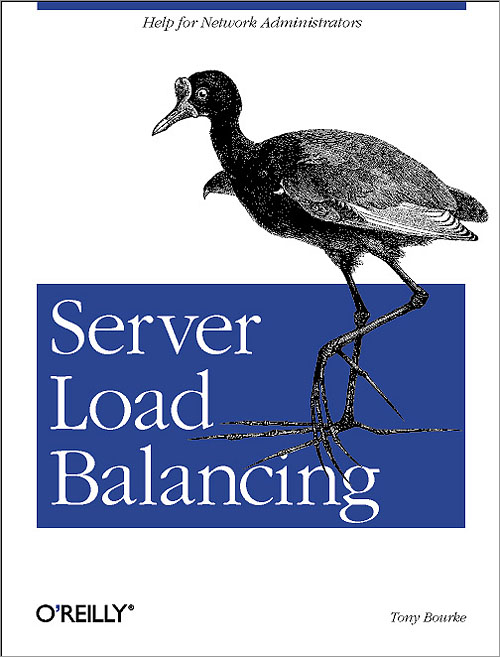
Server Load Balancing


Load balancing improves network performance by distributing traffic efficiently so that individual servers are not overwhelmed by sudden fluctuations in activity. Server Load Balancing is a guide to this critical component of high availability, clustering, and fault tolerance, all of which provide the infrastructure for reliable Internet sites and large corporate networks.
Much of the information on load balancing comes from vendor-specific manuals that use inconsistent terminology and are often biased toward the products they cover. Server Load Balancing explains to engineers and technicians the concepts and terminology of load balancing and offers practical guidance for planning and implementing it in almost any environment. It includes a configuration guide with diagrams and sample configurations for installing, configuring, and maintaining products from the four major vendors:
  • Alteon WebSystems
  • Cisco's CSS Series (formerly ArrowPoint)
  • F5's BIG-IP
  • the Foundry ServerIron series
By comparing several load balancing products, you'll gain a deeper understanding of the technology and how best to use it to improve your network performance. No system administrator responsible for traffic management should be without this practical guide.


[Click for More]

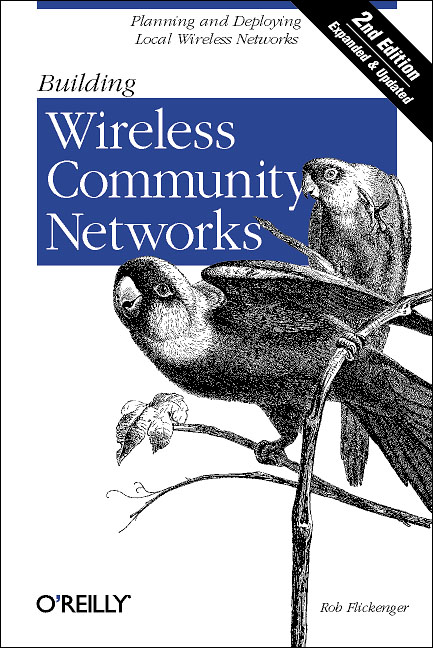
Building Wireless Community Networks


Building Wireless Community Networks is about getting people online using wireless network technology. The 802.11b standard (also known as WiFi) makes it possible to network towns, schools, neighborhoods, small business, and almost any kind of organization. All that's required is a willingness to cooperate and share resources.
The first edition of this book helped thousands of people engage in community networking activities. At the time, it was impossible to predict how quickly and thoroughly WiFi would penetrate the marketplace. Today, with WiFi-enabled computers almost as common as Ethernet, it makes even more sense to take the next step and network your community using nothing but freely available radio spectrum.
This book has showed many people how to make their network available, even from the park bench, how to extend high-speed Internet access into the many areas not served by DSL and cable providers, and how to build working communities and a shared though intangible network. All that's required to create an access point for high-speed Internet connection is a gateway or base station. Once that is set up, any computer with a wireless card can log onto the network and share its resources.
Rob Flickenger built such a network in northern California, and continues to participate in network-building efforts. His nuts-and-bolts guide covers:
  • Selecting the appropriate equipment
  • Finding antenna sites, and building and installing antennas
  • Protecting your network from inappropriate access
  • New network monitoring tools and techniques (new)
  • Regulations affecting wireless deployment (new)
  • IP network administration, including DNS and IP Tunneling (new)
His expertise, as well as his sense of humor and enthusiasm for the topic, makes Building Wireless Community Networks a very useful and readable book for anyone interested in wireless connectivity.

[Click for More]

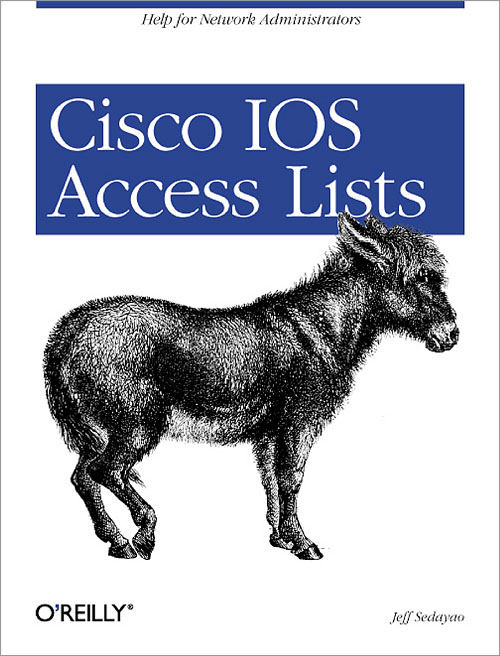
Cisco IOS Access Lists


Cisco routers are used widely both on the Internet and in corporate intranets. At the same time, the Cisco Internet Operating System (IOS) has grown to be very large and complex, and Cisco documentation fills several volumes.
Cisco IOS Access Lists focuses on a critical aspect of the Cisco IOS--access lists. Access lists are central to the task of securing routers and networks, and administrators cannot implement access control policies or traffic routing policies without them. Access lists are used to specify both the targets of network policies and the policies themselves. They specify packet filtering for firewalls all over the Internet.
Cisco IOS Access Lists covers three critical areas:
  • Intranets. The book serves as an introduction and a reference for network engineers implementing routing policies within intranet networking.
  • Firewalls. The book is a supplement and companion reference to books such as Brent Chapman's Building Internet Firewalls. Packet filtering is an integral part of many firewall architectures, and Cisco IOS Access Lists describes common packet filtering tasks and provides a "bag of tricks" for firewall implementers.
  • The Internet. This book is also a guide to the complicated world of route maps. Route maps are an arcane BGP construct necessary to make high level routing work on the Internet.
Cisco IOS Access Lists differs from other Cisco router titles in that it focuses on practical instructions for setting router access policies. The details of interfaces and routing protocol settings are not discussed.


[Click for More]