Sunday, January 31, 2010

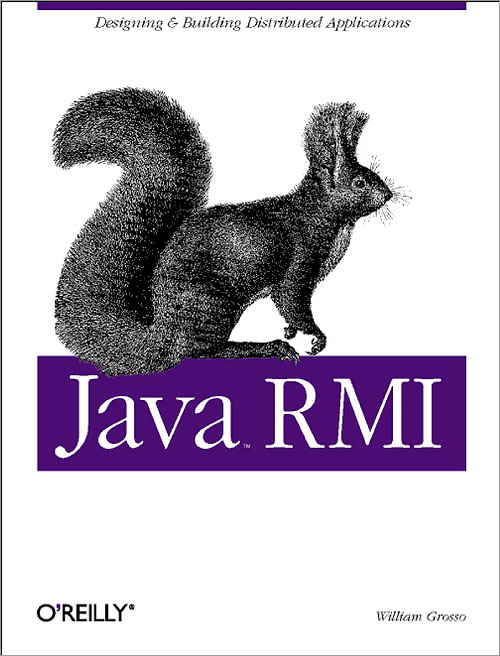
Java RMI

Java RMI contains a wealth of experience in designing and implementing Java's Remote Method Invocation. If you're a novice reader, you will quickly be brought up to speed on why RMI is such a powerful yet easy to use tool for distributed programming, while experts can gain valuable experience for constructing their own enterprise and distributed systems.
With Java RMI, you'll learn tips and tricks for making your RMI code excel. The book also provides strategies for working with serialization, threading, the RMI registry, sockets and socket factories, activation, dynamic class downloading, HTTP tunneling, distributed garbage collection, JNDI, and CORBA. In short, a treasure trove of valuable RMI knowledge packed into one book.


Java Server Pages


JavaServer Pages (JSP) technology provides an easy way to create dynamic web pages. JSP uses a component-based approach that allows web developers to easily combine static HTML for look-and-feel with Java components for dynamic features. The simplicity of this component-based model, combined with the cross-platform power of Java, allows a web development environment with enormous potential.
JavaServer Pages shows how to develop Java-based web applications without having to be a hardcore programmer. The author provides an overview of JSP concepts and discusses how JSP fits into the larger picture of web applications. Web page authors will benefit from the chapters on generating dynamic content, handling session information, accessing databases, authenticating users, and personalizing content. In the programming-oriented chapters, Java programmers learn how to create Java components and custom JSP tags for web authors to use in JSP pages.


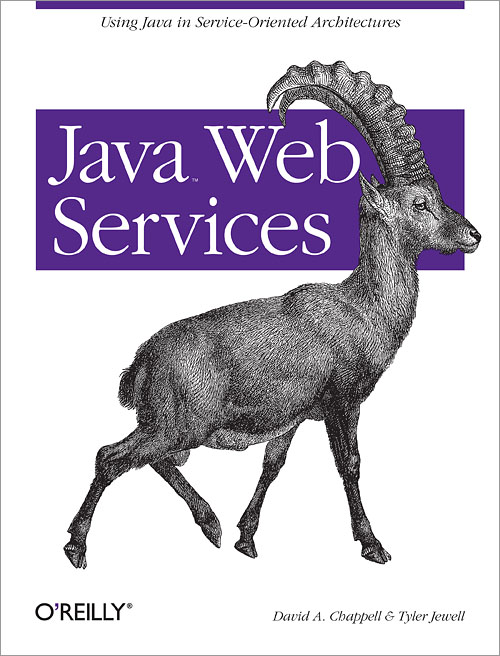
Java Web Services


For many Java developers, web services appeared to come out of nowhere. Its advantages are clear: web services are platform-independent (like Java itself), language-agnostic (a clear advantage over Java RMI), can easily be tunneled through firewalls (an obvious benefit to anyone who has dealt with modern enterprise networks), object-oriented (we all know about that), and tends to be loosely coupled (allowing more flexible application development). But these advantages have been obscured by a cloud of hype and a proliferation of jargon that are difficult to penetrate. What are SOAP, UDDI, WSDL, and JAXM? To say nothing of JAXR, tModels, category bags, WSFL, and other friends? And assuming that you understand what they are, how do you do anything with them? Do they live up to their promises? Are they really the future of network computing, or a dead end?
Java Web Services gives the experienced Java developer a way into the Web Services world. It helps you to understand what's going on, what the technologies mean and how they relate, and shows Java developers how to put them to use to solve real problems. You'll learn what's real and what isn't; what the technologies are really supposed to do, and how they do it. Java Web Services shows you how to use SOAP to perform remote method calls and message passing; how to use WSDL to describe the interface to a web service or understand the interface of someone else's service; and how to use UDDI to advertise (publish) and look up services in each local or global registry. Java Web Services also discusses security issues, interoperability issues, integration with other Java enterprise technologies like EJB; the work being done on the JAXM and JAX-RPC packages, and integration with Microsoft's .NET services.
The web services picture is still taking shape; there are many platforms and APIs to consider, and many conflicting claims from different marketing groups. And although web services are inherently language-independent, the fit between the fundamental principles on which Java and web services are based means that Java will almost certainly be the predominant language for web services development. If you're a Java developer and want to climb on the web services bandwagon, or if you only want to "kick the tires" and find out what web services has to offer, you will find this book indispensable.


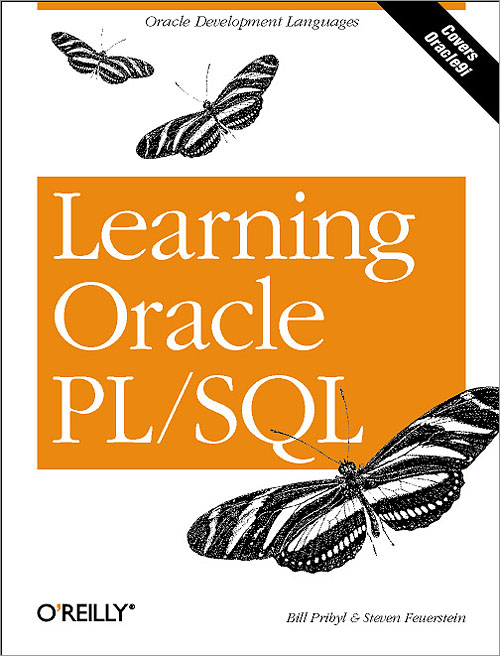
Learning Oracle PL/SQL


PL/SQL, Oracle's programming language for stored procedures, delivers a world of possibilities for your database programs. PL/SQL supplements the standard relational database language, SQL, with a wide range of procedural features, including loops, IF-THEN statements, advanced data structures, and rich transactional control--all closely integrated with the Oracle database server.
Knowing where to start with Oracle's procedural language is not always obvious to a newcomer, especially considering the language's feature set and the sheer size of the official documentation (not to mention Oracle's ever-increasing number of pre-built PL/SQL programs). But Learning Oracle PL/SQL offers the signposts and guidance you need to come up to speed on the language, delivered in a manageable number of pages while covering all the essentials.
Topics include:
  • PL/SQL--what is it, and why use it? Why use PL/SQL instead of Java?
  • Syntax and examples of all core language constructs
  • Creating, using, and reusing stored procedures, functions, and packages
  • Building web-based applications using PL/SQL features available "out of the box" (such as PL/SQL Server Pages)
  • Securing PL/SQL programs against attack
  • Benefits of third-party developer tools and integrated development environments
  • Connecting PL/SQL to email, Java, and the Internet
Meticulously crafted with all-new examples downloadable from examples.oreilly.com/learnoracle, the book addresses language features available in all versions of Oracle, from Oracle7 to Oracle8i to Oracle9i.
Learning Oracle PL/SQL was written by PL/SQL experts Bill Pribyl and Steven Feuerstein, whose easy-to-read style and attention to detail has made other O'Reilly books (such as the bestselling Oracle PL/SQL Programming) very popular among Oracle developers worldwide. Learning Oracle PL/SQL is meant for a wide range of target audiences, including both beginning programmers and those already experienced with other programming languages. Whether you are a new developer, a crossover programmer from another database system, or a new database administrator who needs to learn PL/SQL, this book will get you well on your way. It is the perfect introduction to Oracle PL/SQL Programming, also by Pribyl and Feuerstein.


Learning WML, and WMLScript-Programming the Wireless Web

The next generation of mobile communicators is here, and delivering content to them will mean programming in WML (Wireless Markup Language) and WMLScript, the languages of the Wireless Application Environment (WAE). The WAE allows information in almost all applications to be formatted for display on mobile devices, such as cell phones, and enables the user to interact with the information.
Why learn yet another technology? According to some estimates, 75 percent of web document viewing by the year 2002 will be through non-desktop devices, many using wireless technologies. Clearly, the future is wireless. For web developers who want to get up to speed quickly in these languages, Learning WML & WMLScript maps out in detail the WAE and its two major components, WML and WMLScript.
Fortunately, the WAE provides a World Wide Web-like model for writing applications, incorporating several key features of the Web to ease the transition for developers. Almost all wireless applications can be written with WML, which replaces HTML in the wireless environment, and WMLScript, which replaces JavaScript. With this book, web developers with some knowledge of programming and C, Java, or JavaScript syntax can easily master both languages.
Chapter by chapter, Learning WML & WMLScript takes readers through the following WML topics:
  • Decks, templates and cards
  • User Interaction
  • Variables and contexts
  • Tasks, events, and timers
  • Text and text formatting
WMLScript topics include:
  • Data types, conversions and variables
  • Operators and expressions
  • Statements
  • Functions
  • Standard libraries
Learning WML & WMLScript is the resource of choice for application developers who want to upgrade their skills and their sites so they won't be left plugged in during the wireless revolution.